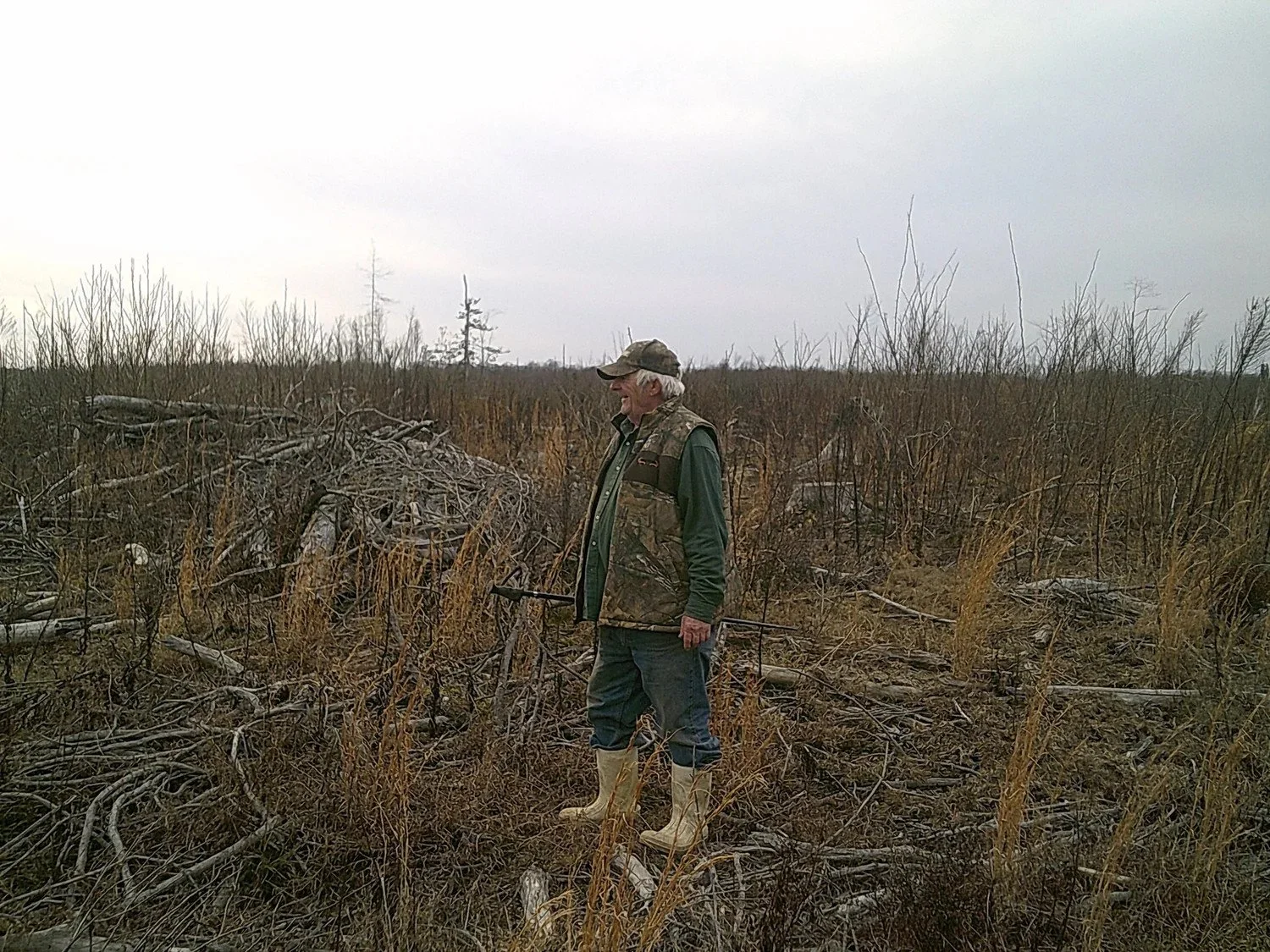
For my friend Roger Gallagher
Introduction
Witness trees are living beings who have experienced incredible historical events beyond the lifespan of any living person, despite our vast differences in biological classification and perceived sentience. As humans, we have no problem feeling this subtle kinship with our wooded neighbors. Be it the experience of sitting under the broad canopy of a tree on hot summer days, eating the many abundant fruits from their limbs, or becoming aware of the deep reciprocal relationship we share with trees in our exchange of oxygen and carbon dioxide, you would be hard pressed to find a person on Earth who does not find some meaningful connection with trees and what they offer to us.
All trees are witness trees. As they live and grow alongside us, they bear witness to the everyday experience of human life, as well as our most cataclysmic moments in history. Here in Virginia, where the entirety of this project is set, witness trees are typically found on centuries-old battlefields and former plantation grounds, though a strong parallel tradition of honoring African American cultural sites is also observed statewide. My project expands the parameters of how we classify witness trees, to include not only the lesser-known historic narratives of this place but also acknowledge the effects of climate breakdown currently accelerating on Earth and the trees that are living through these defining experiences of our time.
One can draw a direct line between colonialism and contemporary climate breakdown, and Virginia is an especially good place to investigate these intersections of history, power, people, and place. Here we can find the origins of modern extractive capitalism, a now global mindset contributing to worldwide climate breakdown, as well as the foundations of a strict racial hierarchy that Americans still fight against today. Property and profits took precedence over human life in colonial Virginia, just as they do today. And during the seventeenth century, the land theft genocide of Indigenous groups allowed for an unchecked expansion of plantation agriculture, cultivated by a massive enslaved population, and governed through a system of extreme cruelty and violence. In our time, the government uses eminent domain against the people to build fracked gas pipelines, manufacture munitions, or power the new wave of fossil fuel-burning computer technology for the AI boom of the 2020s.
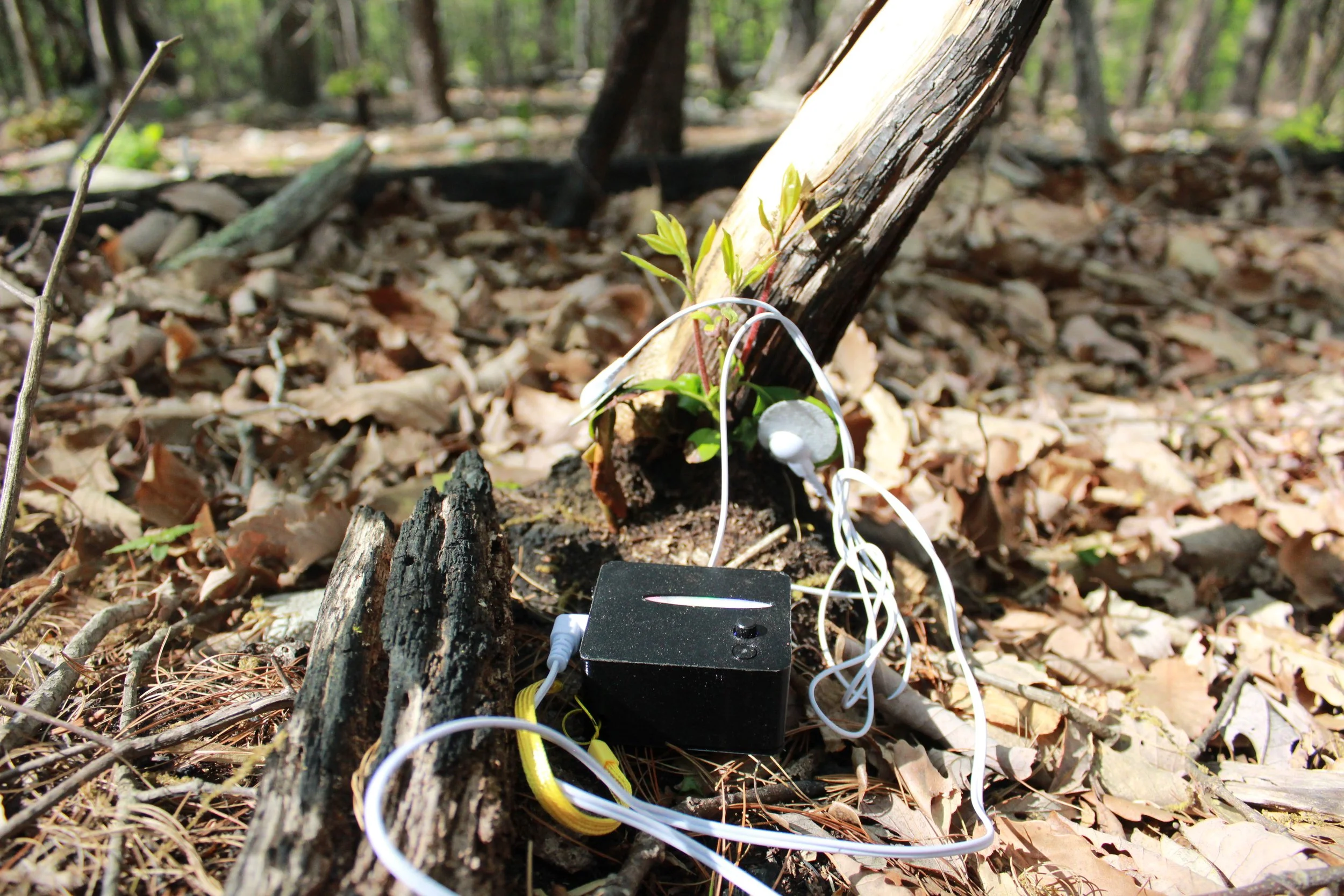
I interviewed 16 trees living within the historic boundaries of colonial Virginia through a process known as biodata sonification. I stuck small sticky pads of the plant sensors to the underside of tree leaves, wiring them to a biodata-to-MIDI converter made by artist/engineer Sam Cusumano, which measures changes in conductivity and admittance in stomatal movement (opening and closing of Stomata) as a plant transpires and exchanges gases, as well as performs water control. These changes in biological measurements over very short periods of time are translated into musical notes providing a real time representation of the rate and magnitude of activity and were played through a synthesizer on my phone. From the eroding beaches of the Chesapeake Bay and its former dynastic plantation grounds, through the Civil War battlefields, old growth groves, and river bottoms of the Piedmont, to the peaks of the Shenandoah Blue Ridge and Appalachian Mountains, the trees speak for themselves.
I think of this as an oral history project, similar to how a folklorist might put a small field recorder in front of an individual during an interview, hit record, and take some photos or video. Working with trees, however, which of course lack vocal cords or other ways of directly communicating with humans, does pose a difficult question of consent. How do you ask permission to discuss traumatic experiences with a being that cannot advocate for itself? Ultimately, I have no answers to this and can only share how I thoughtfully engaged with these trees. I researched and read up on the ecological and historical context of each tree or location. Sometimes I had a tree in mind, sometimes I searched for one. But with every tree, I brought an offering, a little water from my bottle or some tobacco rolled out from the tip of a cigarette. And if I could, I sat and meditated at the locations.
I created the other sounds and textures here using many different tools, techniques, and processes. The environmental audio of each location and the witness tree living in that space make up the core of each track. When the location was quiet and isolated enough, such as the dogwood living in the blast zone of the Mountain Valley Pipeline, or the boxwoods on the Barboursville plantation ruins, I sat and listened to each tree and then tuned my guitar to them and played along with the sounds I heard in my headphones. When the locations were too public to interact with them in these ways, I brought pre-recorded material and played it into the base of a tree with a contact speaker and then recorded that audio using probe-style contact microphones stuck in the dirt.
Another trick I used was turning different media—photos and non-photographic material, as well as history texts—into WAV files or MIDI data that I could then work with further. I used a visual-to-auditory translator, which transformed any digital image I had of a location or tree into pixelated noise tracks that I could collage together. Text to binary code to MIDI synthesis was another way I used historic texts in this project; most of the more obvious MIDI sounds that can be heard were constructed from source material related to each location, including the work of my grandmother Mary Hostetler Oakey. I also sampled, processed, and at times heavily abstracted YouTube videos and other miscellaneous A/V material related to each location.
As for the guitar, I focused on the drone, employing as many different bowing effects and gadgets as I could, though I also used sparse or frenetic picking, too. The Cantarell, a 3D printed, wheeled guitar attachment similar to a hurdy gurdy, was a sonic inspiration for the tone of this project, though I also used electronic bows, a Rotary Bow, and violin bows to get the different sounds you hear throughout. I tuned my guitar to the notes that were coming out of the biodata device, sometimes improvising with them, and sometimes playing old tunes related to a location. Some pieces feature biodata I tuned so as to harmonize with an instrument, but much of the biodata sounds are raw samples edited only for length or effect.
The result of my years-long process of research, recording, assembling, and editing is a nearly two-hour audio document tracing the history of early settler colonialism in Virginia to the present, where we sit on the precipice of irreversible climate chaos. I have been humbled by these trees. I have been humbled to learn the true depth of history, which some of these beings have experienced in their lifetimes, and humbled by the resilience they exhibit under the most extreme conditions. And I remain convinced that there is so much more to learn from them if we take the time to listen.
Loblolly Pine Tsenacommacah
The Witness Tree begins in the low Tidewater region of Tsenacommacah, the Powhatan Algonquian place name for the Chesapeake Bay and her tributary waters. This location, situated about 10 miles from the town of Kilmarnock, is known today as the Hughlett Point Natural Area Preserve, and is among the earliest settled areas, during the mid-seventeenth century, of Virginia’s “Northern Neck,” a peninsula bordered by the Potomac River to the north and the Rappahannock River to the south.
Endemic to this region is the loblolly pine, a tall evergreen tree with slender needles and a scaly bark, who can be seen growing along Hughlett Neck in dense stands bordering the sandy shores. On the edge of these forests are the sun-bleached, skeletal remains of their piney cousins, killed off by saltwater intrusion, an effect of rising sea levels, and known colloquially as “ghost forests.” Clusters of these dead trees can be seen up and down the beach in the newly formed tidal wetlands that are created as the water steadily rises.
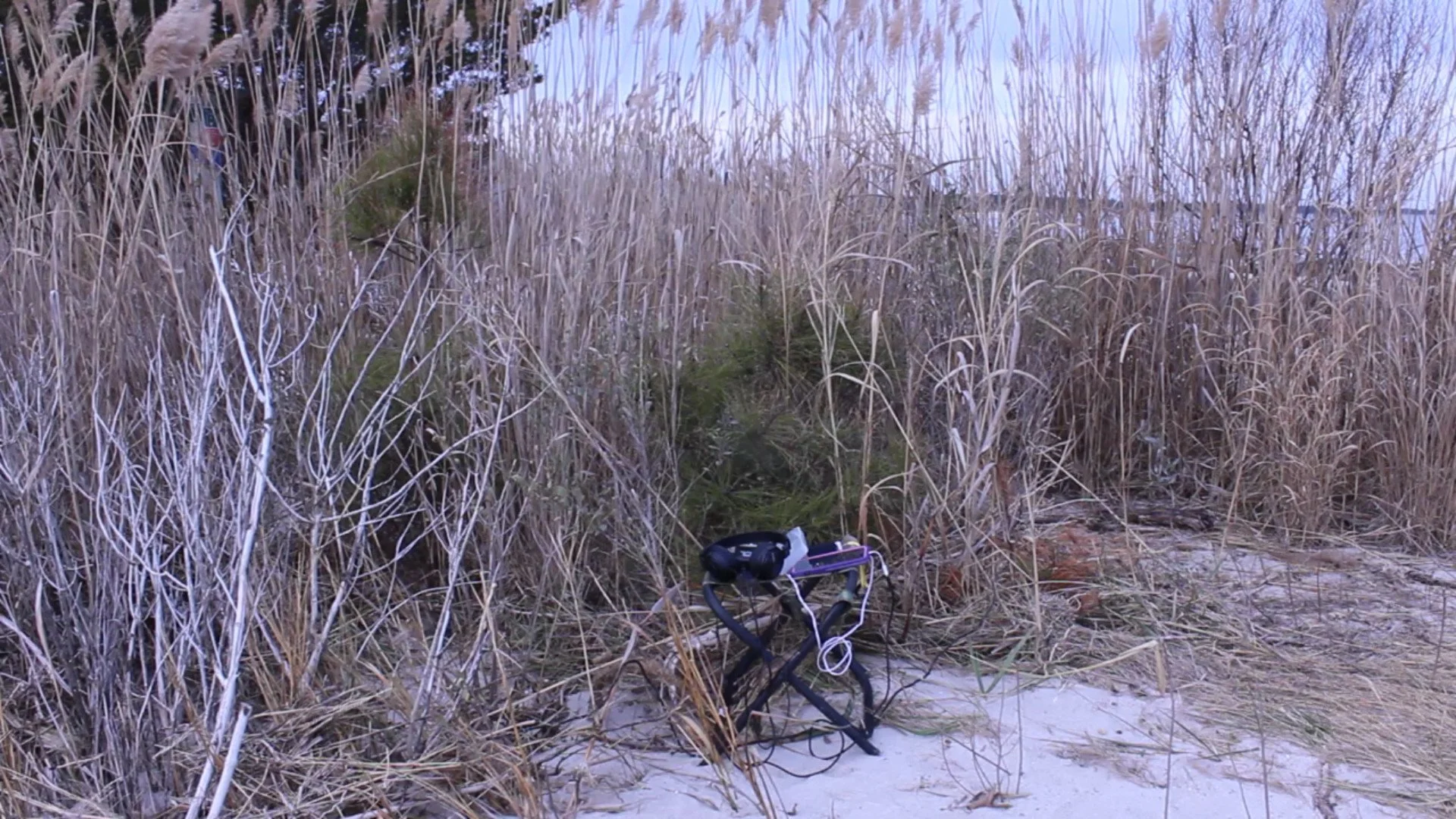
I chose to interview a juvenile loblolly pine tree, still seemingly healthy and growing in the loose sand near the water, surrounded by dead trees in the surf and beach grass. The sounds of shore birds are drowned out by rising distorted tones, mimicking the accelerating effects of climate breakdown on this environment, ending with the sound of water on all sides of the mic. The Chesapeake region is ranked second in coastal land lost to climate-driven sea level rise, right behind Louisiana.
American Chestnut Caledon
Upriver from Hughlett Point, along the narrowing channel of the great Potomac River, is the former Caledon Plantation, est. in 1659, now home to Caledon State Park. The former plantation grounds feature densely wooded trails with impressive hardwood trees, and it is fair to say that these woods have witnessed the entirety of colonial history to the modern era, from the land theft genocide of Indigenous groups to the formation and eventual abolition of the strict racial hierarchy of American chattel slavery.
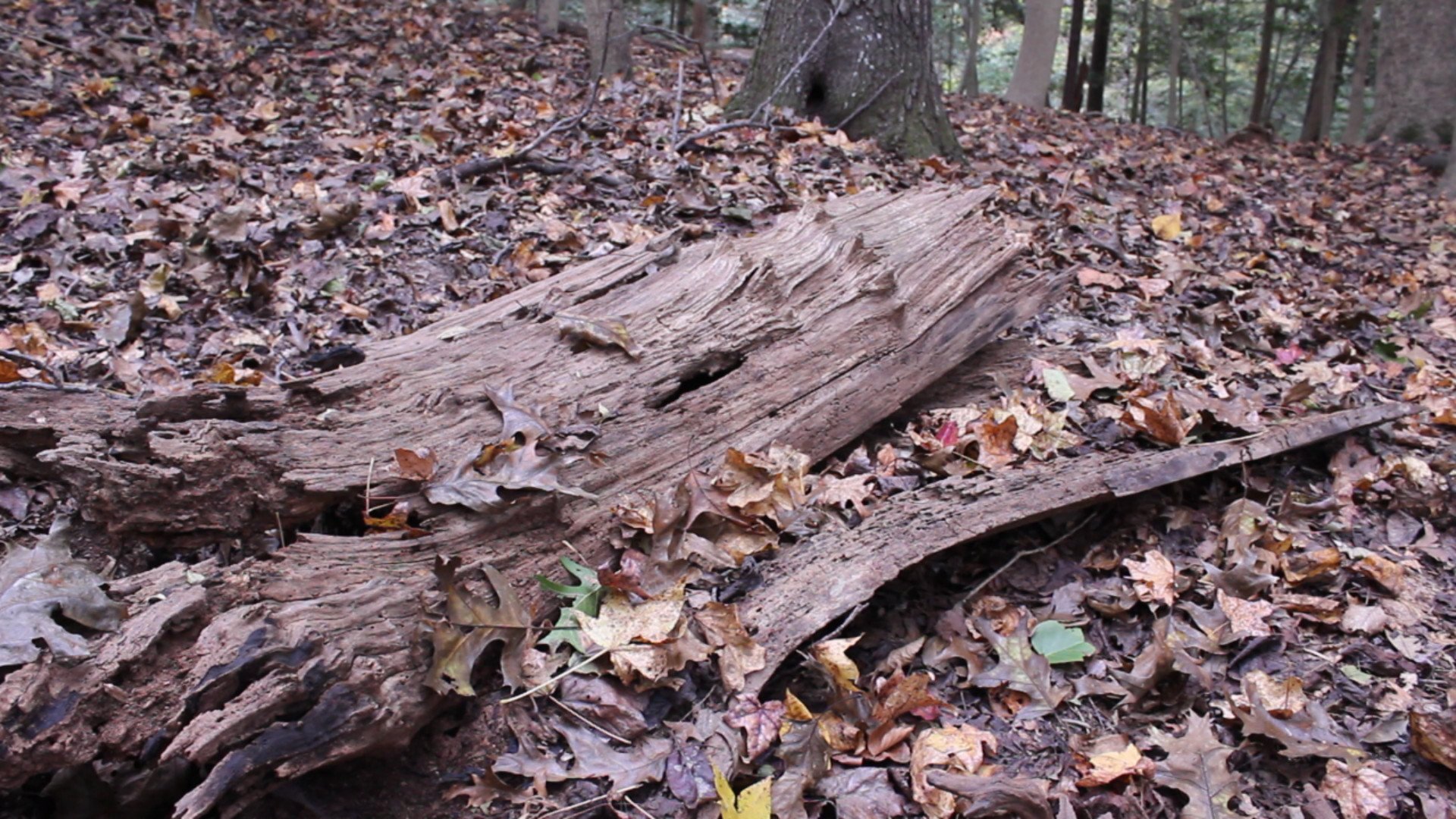
One of the trees that dominated the historic landscape of Virginia was the American chestnut. In some sections of the state, as many as one in three trees were chestnuts, until the introduction of a necrotic fungal disease triggered a massive die-off. The American chestnut I interviewed at Caledon is now only a small pile of rotting wood resting on the forest floor. This large tree likely stood prior to the end of the Civil War and gave its large harvests of chestnuts to many generations of animals and humans living nearby.
The pops and clicks that can be heard over the brushiness of the tree canopy above are the sounds recorded by a probe-style contact mic capturing nearby trees creaking in the wind. I fed drones and processed audio of the history of the Chestnut blight in Virginia into the remnants of this tree through a contact speaker, then recorded, and later used the sounds to tune my guitar. Groups of small songbirds drifted through the dark afternoon forest, leaving as quickly as the strong breeze they rode in on.
Sycamore Robinson River
All trees living in Virginia are experiencing extreme conditions brought on by human-caused climate breakdown, but those living in the river bottomlands endure the most drastic effects. The sycamore tree can be found in many of these environments statewide, often lining riverbanks, stretching zigzag twigs and branches upwards of 100 feet, forming a ghostly white crown in winter and a lush broad-leafed canopy in summer.
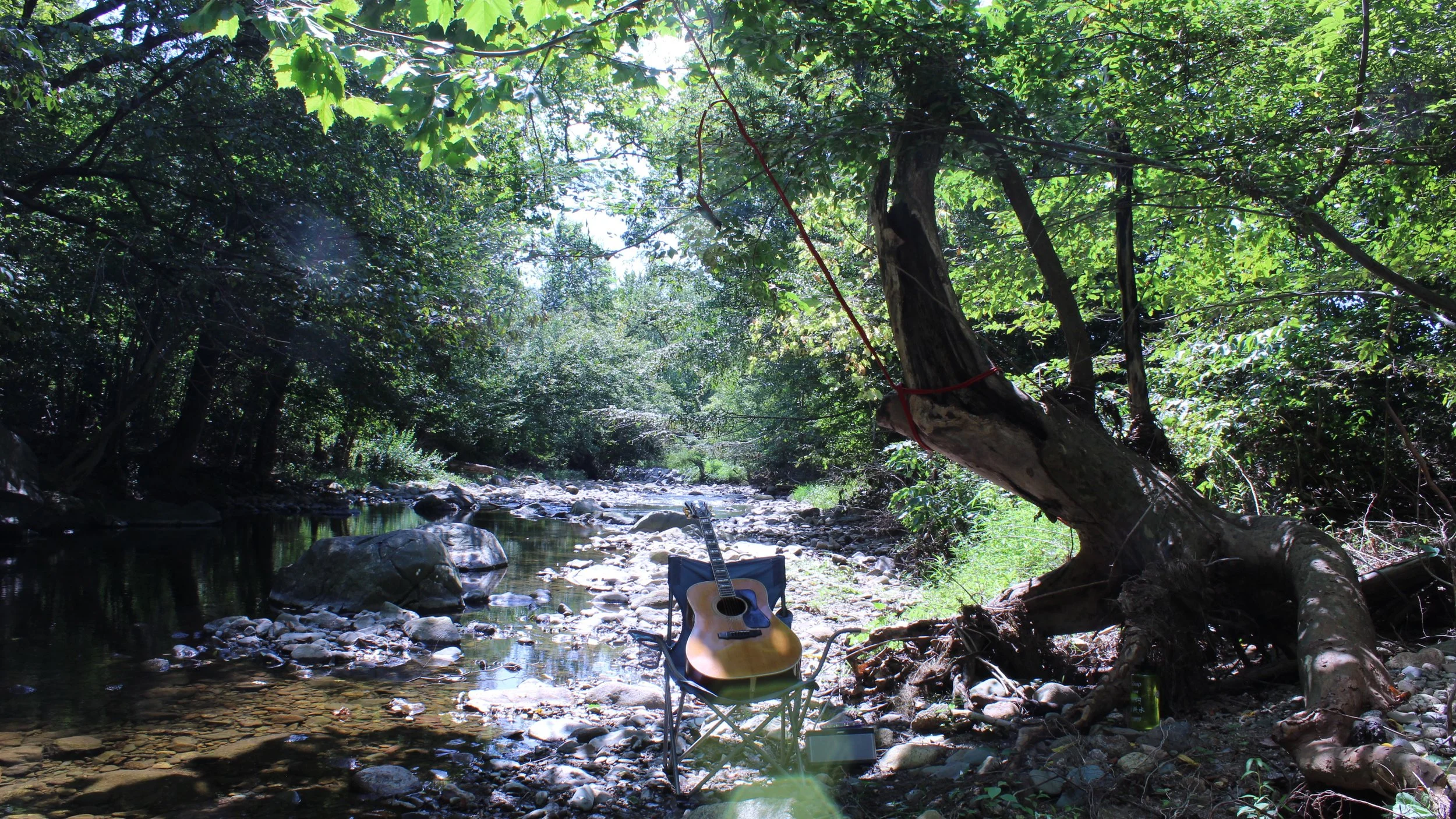
This sycamore tree lives on a rocky bank of the Robinson River in Madison County. With three great roots like feet, it squats above the river rocks with a broken, stumpy trunk. This tree lived through the great Madison flood of 1995, when 30 inches of rain fell over nearly 24 hours. The Madison flood was similar to the extreme flooding western North Carolina experienced during Hurricane Helene. In the last two years, this tree has lived through two historic droughts as well as several extreme precipitation and flooding events, yet it remains rooted firmly to the riverbed.
This track illustrates the experience of weather whiplash, the rapid and intensifying swings in weather, such as extreme precipitation events leading to flooding, extreme heat, and extreme drought, etc. I collaged the biodata from this sycamore, as well as several others nearby, with historic news broadcasts, contemporary drought reports, field recordings of recent floods, and the trickle of the stream during extreme drought. The effect is as unpredictable as the weather itself. Several of the young sycamore trees that can be heard near the end of this track have since died after drowning in consecutive flooding events.
Dogwood Mountain Valley Pipeline Blast Zone
The Virginia Company of London arrived at Jamestown in 1607, and after failing at a variety of crude exports, finally settled on tobacco, relentlessly cultivating the crop until their fields were wasted and the market totally glutted. In our modern era, fossil fuel buildouts supply the most valuable commodity of our time, fracked methane gas. The reckless prospect of linear profits through any means necessary is fully on display with the 303-mile pipeline known as MVP.
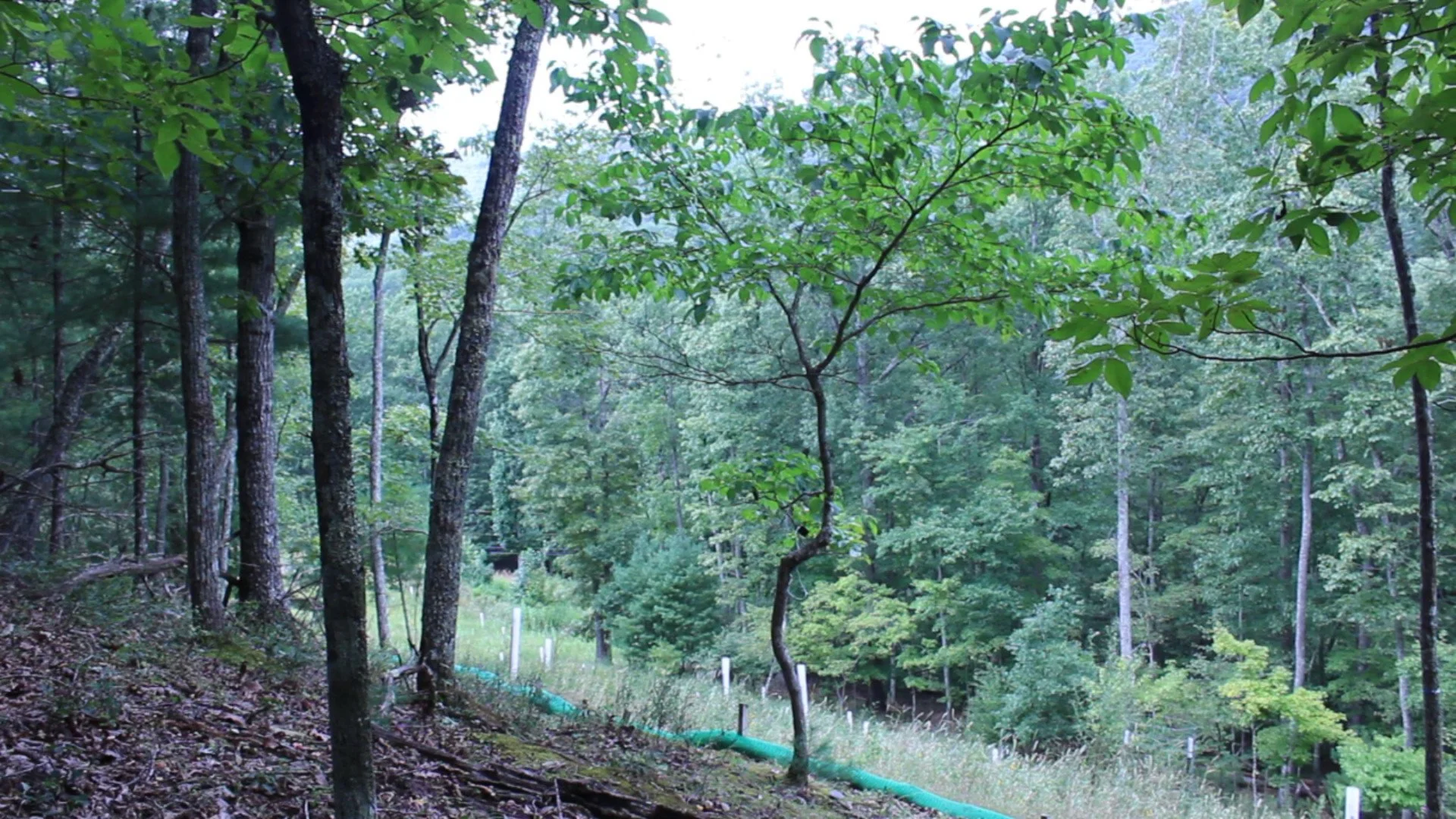
This dogwood tree grows at the edge of the blast zone inside Jefferson National Forest and lives just uphill from a small stream that feeds nearby Craig Creek, one of over 400 water crossings the pipeline has harmed. The tree has witnessed the construction of the entire MVP, from the crews of men tearing a path through the forest with chainsaws and heavy machinery and burying sections of pipe into the steep hillsides.
In this track, I follow the life experience of the dogwood, from the years before the pipeline, to the tragic aftermath. Audio samples include news reports about the Yellow Finch tree sit and clashes between pipeline fighters and MVP construction workers. For the rhythm track, I used a text to binary to MIDI synthesis, made from a fact sheet detailing environmental impacts of the fracked gas pipeline. As the dust settles, you get dumped off where you started, but with a fractured, more unrecognizable environment all around you.
Beech Stratford Hall
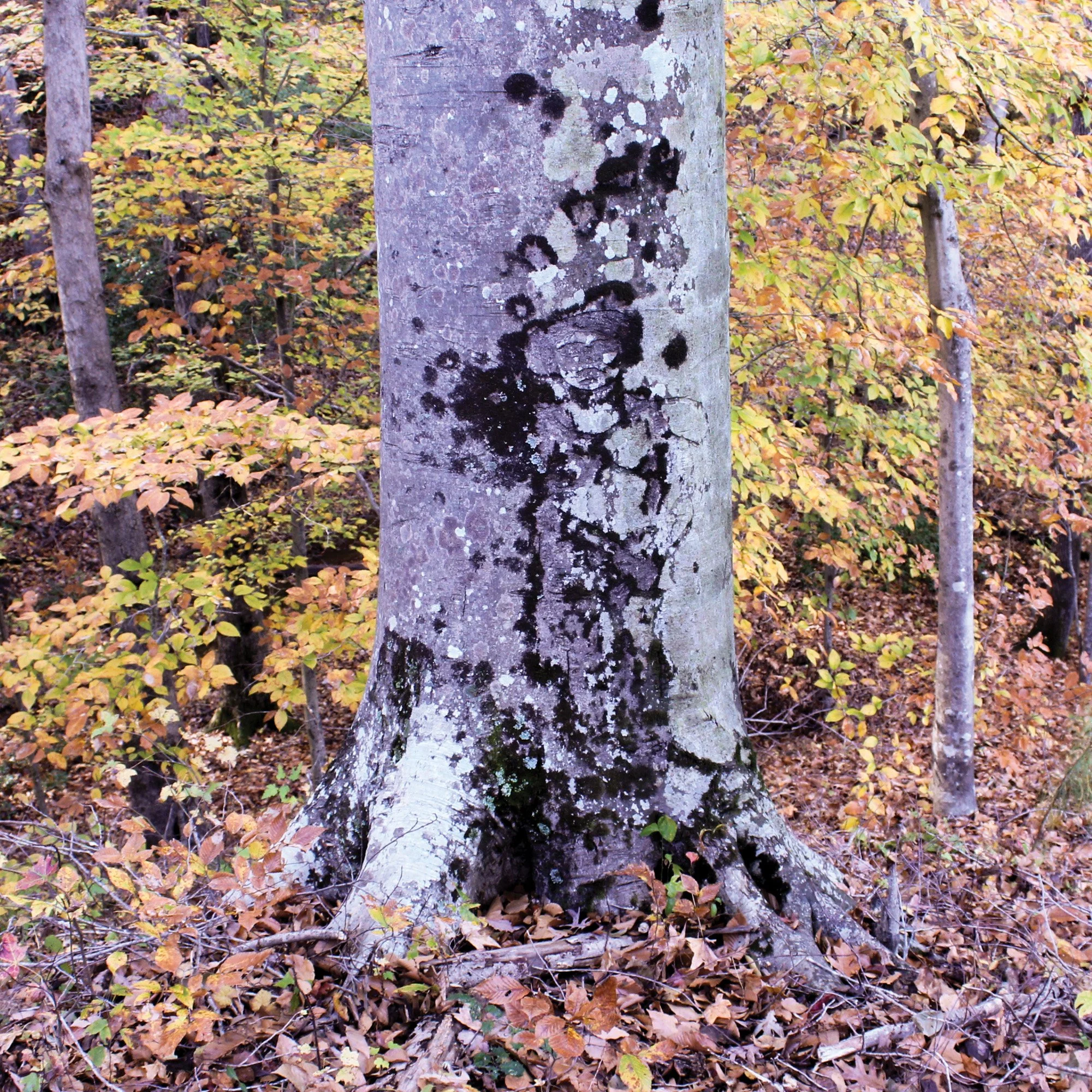
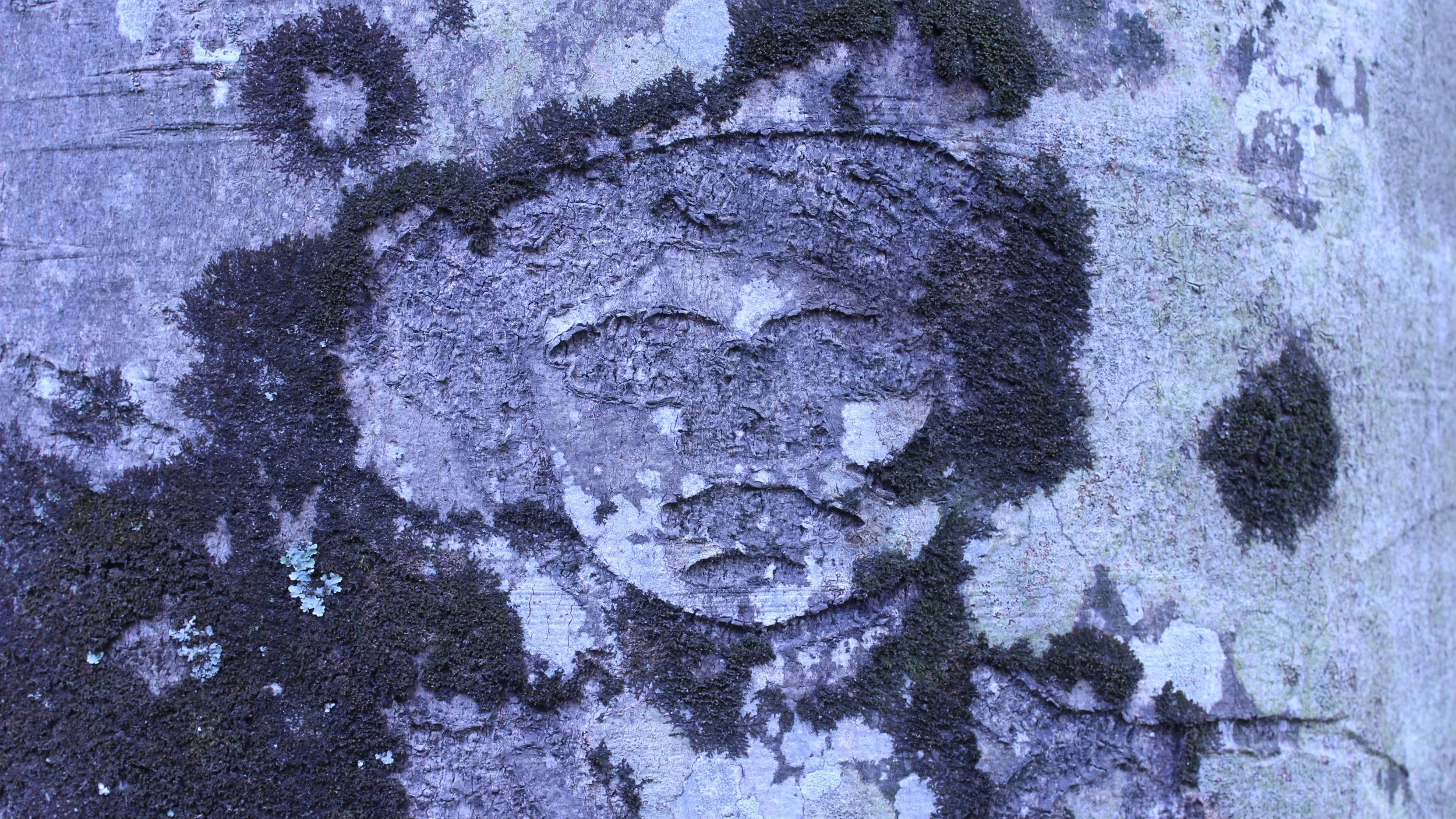
My friend Roger Gallagher, an independent historian and lifelong resident of Westmoreland, introduced me to this beech tree in 2015, and I have thought about it ever since. Living deep in the woods on the outskirts of the historic Stratford Hall plantation, the ancestral home of the Lees of Virginia, Roger believed this carving of a “Roman soldier” predated the Civil War and served as a directional marker for travelers on the wooded paths leading to the Potomac River. It is the last of five to survive.
Stratford Hall itself is one of the quintessential Tidewater brick plantation-style homes of Virginia and sits above the Potomac River along a unique line of cliffs known as the Calvert Formation. By the mid-eighteenth century, the Lees enslaved upwards of 200 people, and as the centuries wore on, they became one of the most influential families of the dynastic Tidewater planters. This area near Stratford’s colonial-era Old Mill Road would have been known to the people living and toiling at the many enslaved communities nearby.
I recreated the mood of Stratford Hall’s backwoods: the isolated eeriness of the location combined with the intensity of the clear-cutting of forest on nearly all sides of the tree, as well as the encroachment of the beech leaf disease that threatens the health of these historic groves. For now, this lone sentinel continues to stand among the spirits and wildlife of the old plantation grounds.
Basswood Market Street Park
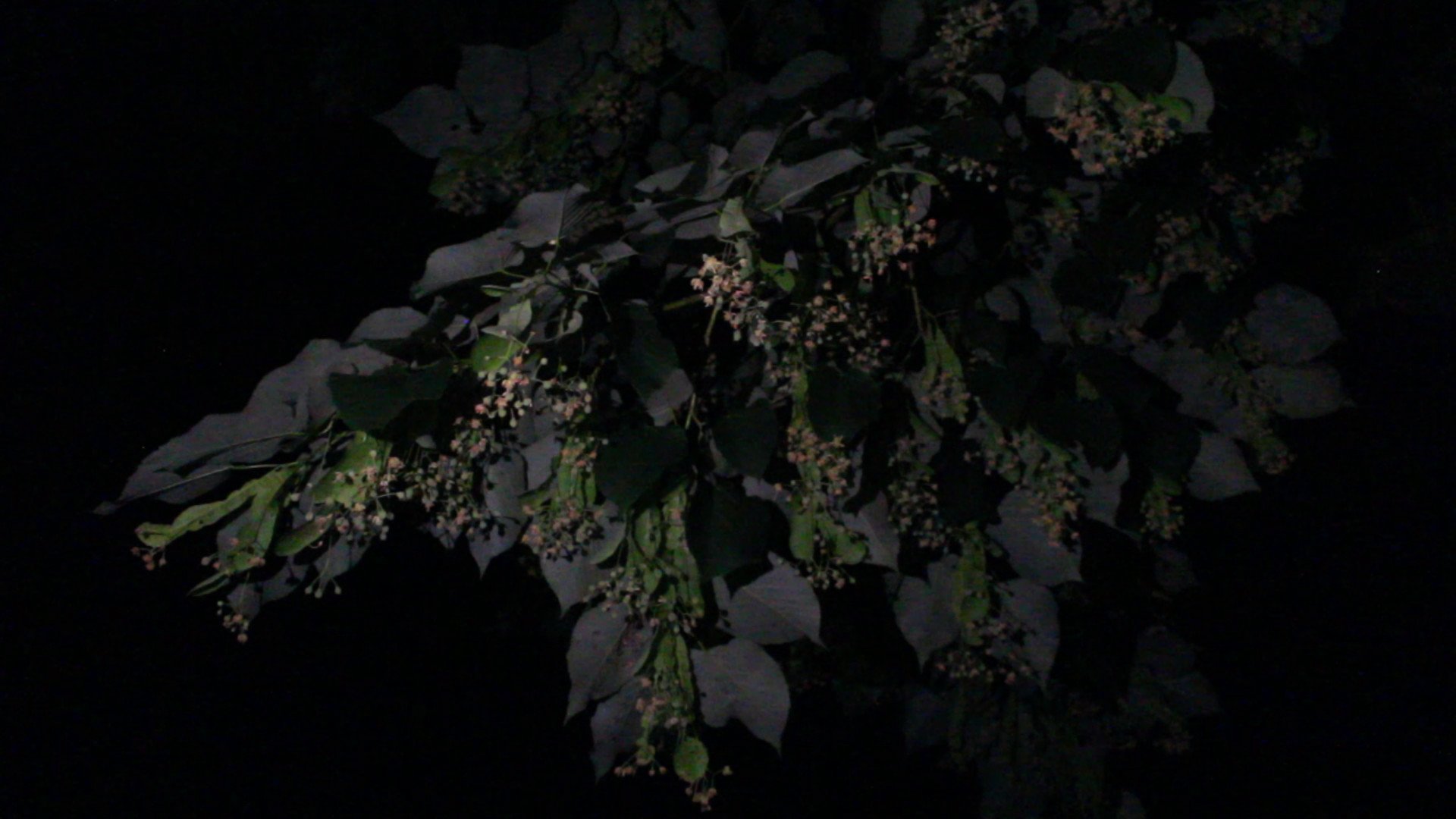
In 1924, Charlottesville unveiled the Robert E. Lee monument, for a whites-only park named for the general in chief of the confederacy. A 100+-year-old basswood, which I interviewed, is the last survivor of that white supremacist agenda and has since grown to become the most prominent tree in the park. Standing on the corner of Market and 1st street, reaching to one side, and hollowed where its trunk has broken off, the basswood continues to offer shade to passersby.
The Charlottesville basswood also witnessed the deadly Unite the Right white supremacist rally, on August 12, 2017, which resulted in the death of counter-protester Heather Heyer, when a white supremacist drove a car into a crowd on nearby 4th street, now Heather Heyer Way. In the days following the attack, city officials voted to shroud the Robert E. Lee monument under a black tarp, and finally, in July 2021, the statue and its pedestal were removed from the area, since renamed Market Street Park.
I started with an audio collage of historic images of the park, its dedication, maps, engravings, newspaper clippings, and other photographic material, using a visual auditory translator that renders images into WAV files. The track abruptly cuts to the park on a summer night. Sounds of the hate rally build as counter-protesters chant, “No Trump, no KKK, no fascist USA,” with the audio of the aftermath of the attack blurring into the visual auditory translation of an image of Lee’s statue getting melted by the Swords into Plowshares recasting/reclaiming project. When I visited in late June of 2025, the large basswood was in full bloom, filling the night air with its fragrant blossoms.
American Boxwood Barboursville Ruins
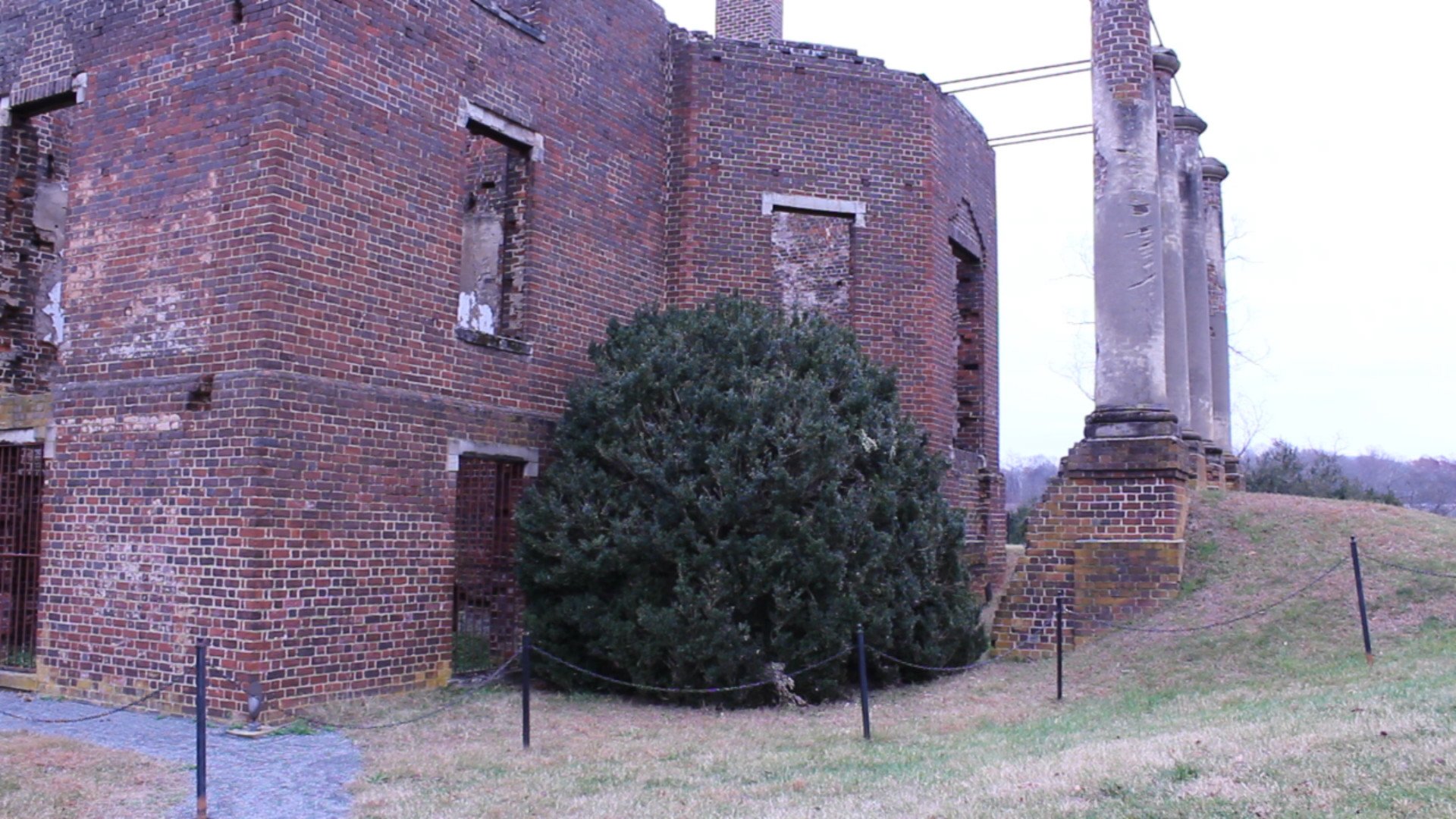
The American boxwood is a shrub-like tree that can be found at many historic homes throughout the state of Virginia, with many of the former plantation properties having particularly large examples. Many of the boxwoods at the historic Barboursville Ruins are not original to the site, but some may have witnessed the Christmas Day fire in 1884 when the mansion was burned to the ground. Today, a tangle of large boxwoods surrounds the old plantation, creating a disorienting effect that winds around the crumbling brick ruin like an unkept maze.
Commissioned by then Governor of Virginia James Barbour and designed by Thomas Jefferson, the mansion was completed in 1822. At the height of their power, Barbour and his overseers enslaved at least 100 people on these grounds, some of whom worked the formal gardens and fields where the boxwoods grow today. Several of the large oaks near the building surely witnessed the brutality of slavery. The mansion now resembles a decrepit brick ruin and a tourist attraction for those visiting the nearby Barboursville winery.
I recorded several of the larger boxwoods, which, in their old age, have created large room-like interiors where I recorded. I also gathered dried leaves from the historic oaks and boxwoods, stuffed my guitar full of them, and played along with the sound of the trees. Later that evening, at home, I lit the leaf guitar on fire and fanned the flames, recording the sounds through a contact mic until the guitar had burned entirely. As the fire died down, only a mess of burnt wood scraps, strings, and metal hardware was left behind.
White Oak Fredericksburg Battlefield
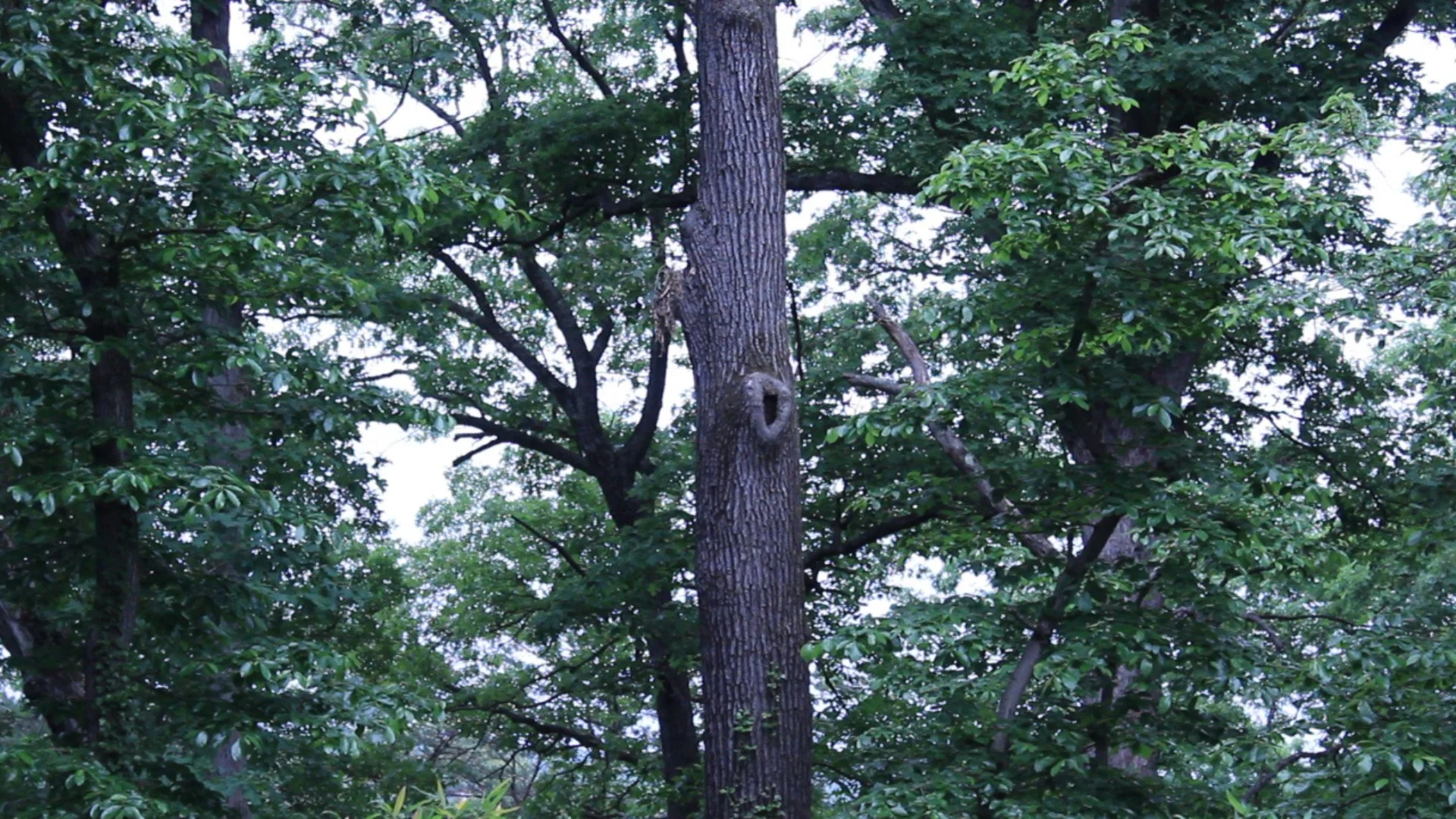
The white oak is a keystone species to the Rappahannock River Valley and is also a tree I am intimately familiar with. Growing up in the Stafford Heights area along the north side of the Rappahannock, I had several witness trees in my backyard, trees that stood during the First Battle of Fredericksburg, when the ridge was lined with Union artillery during the shelling of the town in 1862. The oldest of these white oak trees blew over during a powerful storm in 2022, though several others remain. Tent pits from the US Army encampments are still visible under some of these trees, appearing like uneven rows of sunken graves along the hillside.
I also interviewed the Brompton oak on the campus of the University of Mary Washington just across the river from my parents’ house. This tree remembers a time when Powhatan Algonquian and the Siouan language of the Manahoac and Monacan were spoken here. The tree was about 200 years old when it witnessed the slaughter along the Sunken Road at Fredericksburg. Upwards of 17,000 men were killed in one of the American Civil War’s worst mass casualty events. The tree likely has many lead bullets still embedded in its trunk.
Subtle pops can be heard at the start of the track, the sounds of artillery tests being conducted downriver at US Army Fort AP Hill, as the audio of a retired Park Service display begins to unravel. Slowed recordings of bugles play as the street fighting commences, compiled from videos of Civil War reenactors making their way towards the killing fields beneath the Brompton oak. As I play the poem song “The Battle of Fredericksburg/Two Soldiers,” the scene descends into harsh noise and chaos, ending with the sound of a CSX trash train passing through the battlefield, as the ghostly text to binary to MIDI synth audio recounts the details of the carnage.
Southern Catalpa Chatham Manor
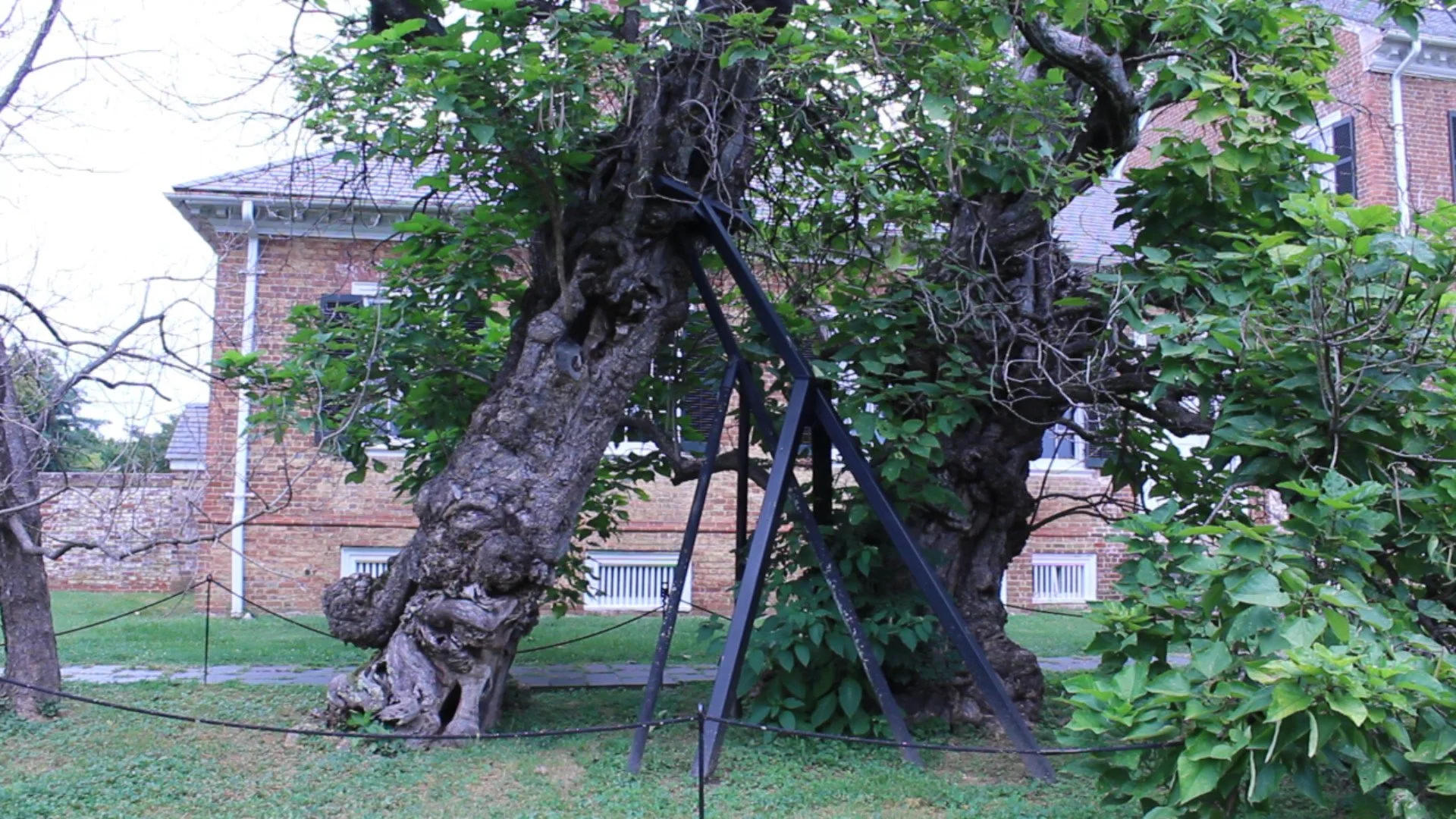
Planted in the dooryard of historic Chatham Manor plantation on the north side of the Rappahannock River, these twisted and gnarled Southern catalpa trees have sat atop this high river bluff for over 150 years. While it is unlikely they witnessed the Chatham Slave Revolt in January of 1805, the Chatham catalpa trees did experience several decades of the brutalizing and morally corrupt system of American chattel slavery. The mansion itself is now owned by the National Park Service and is free and open to public. The old fields surrounding the mansion appear much as they did in the nineteenth century, neat rows of crops still growing within earshot of the big house.
It was the Battle of Fredericksburg that ultimately gave these trees their notoriety. After the fighting, when most buildings around town were used as field hospitals, a young Walt Whitman happened to spend an afternoon on the old plantation grounds while searching for his wounded brother. Surveying the gruesome scene he witnessed, Whitman wrote of Chatham’s catalpa trees, “[A]t the foot of a tree, within ten yards of the front of the house, I notice a heap of amputated feet, legs, arms, hands, etc., a full load for a one-horse cart . . . Several dead bodies lie near . . . toward the river, are fresh graves . . . their names on pieces of barrel staves or broken board, stuck in the dirt.” Several stone grave markers of unknown soldiers still rest in the yard today.
The ghostlore of Chatham is possibly as legendary as the trees themselves, so I imagined the scene in front of this large brick mansion as a dance of death, with guitar tones like horns and a looping distorted beat overseeing the merriment. Poet Raven Mack reads Walt Whitman’s experience at Chatham in its entirety as the flittering tones rise higher, eventually fading into the drone of the contemporary riverfront soundscape, glimpses of the past as brief as a spectral vestige in the river fog.
Live Oak Hampton University
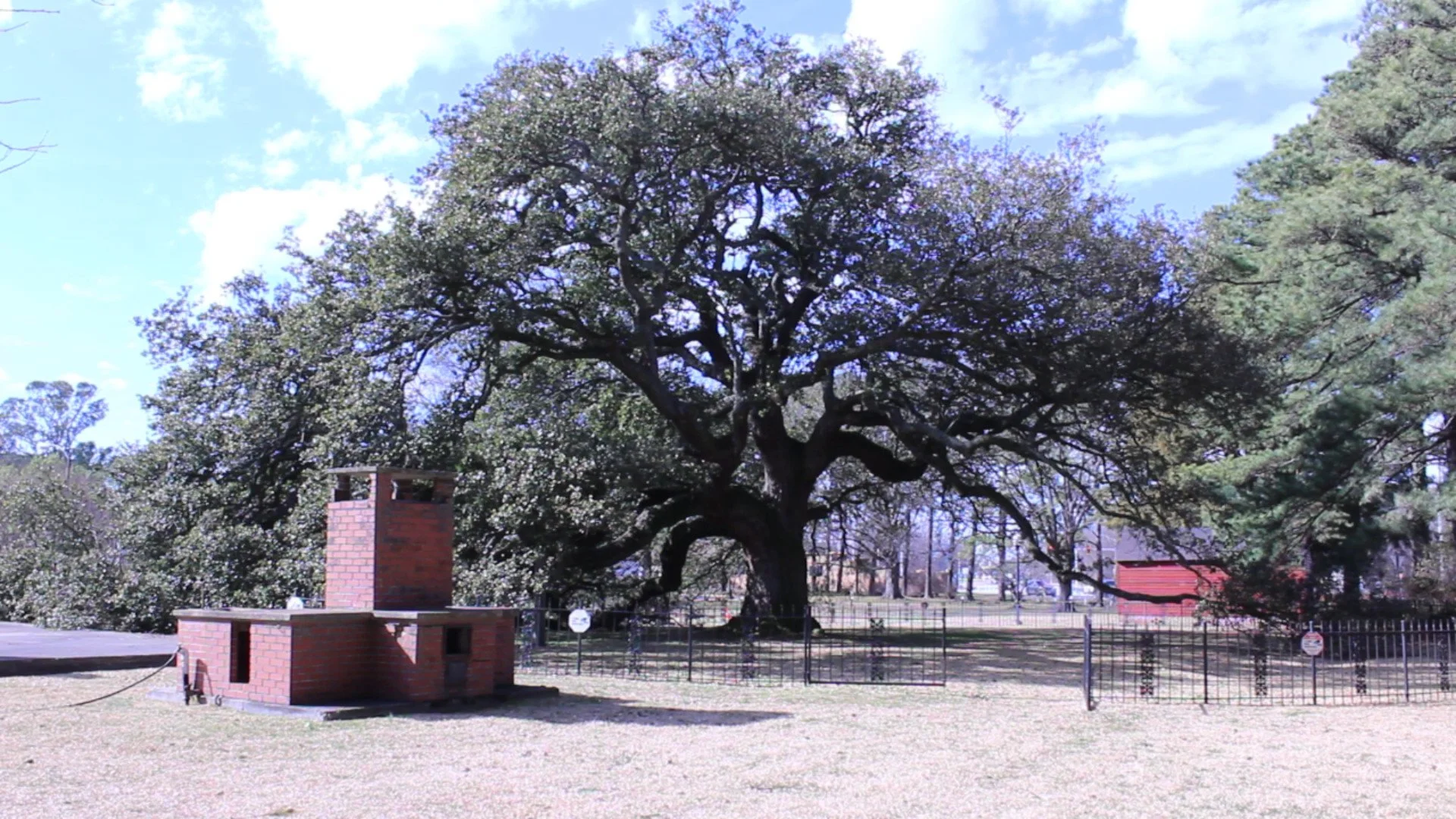
Near the entrance to Hampton University, this sprawling live oak known as the Emancipation Oak was the site of the first Southern reading of the Emancipation Proclamation in 1863. This large tree, which sits between Interstate 64 and the university, is encircled by an ornamental metal fence and picnic grounds. It has witnessed the entire transformation of this area, from a 160-acre plantation known as Little Scotland, to the HBCU that educates new generations. The rapid development of Hampton, Virginia, makes for a busier soundscape than some of the other trees featured here, but under the oak’s sweeping branches and dense foliage, one is easily transported to a sacred space.
During the US Civil War, Union forces assumed control of this section of the Hampton River and nearby Fort Monroe. Waves of enslaved people fleeing the brutality of their conditions arrived at this US Army-controlled territory, and eventually, camp-style lodging was built near the fort to house these refugees. These self-emancipated people of the Grand Contraband Camp sat under this magnificent oak and received formal education from a free African American woman named Mary Peake in 1861.
A loud gas engine tears through the opening of this track as the text to binary to MIDI synthesis of the Emancipation proclamation begins to play. Echoes of the proclamation drone on as the biodata from the oak speaks into the recorder. As the Emancipation Proclamation audio fades, high stretched guitar tones of “John Browns Body” float in, a song I chose not only for its significance as an American Abolitionist tune, but also because in 1873, Hampton Singer’s second soprano and former student Lucy Leary lived at Harpers Ferry. Her father had been killed while participating in John Brown’s raid.
Eastern Red Cedar Stoney Lonesome Cemetery Occoquan Workhouse
High above the Occoquan River in Fairfax County are the remnants of the notorious Lorton Reformatory, a prison complex of minimum to maximum security facilities that, until 1997, warehoused Washington, DC’s incarcerated population. The Prison occupied the original tract of Major William Lindsay’s plantation, the Laurel Hill House. It began operations as an agricultural work-style camp in 1910. Here, inmates dug the clay from the river and fired the bricks to build their own big house, with many of the original buildings embodying the clean symmetry of the colonial architecture indicative of the region.
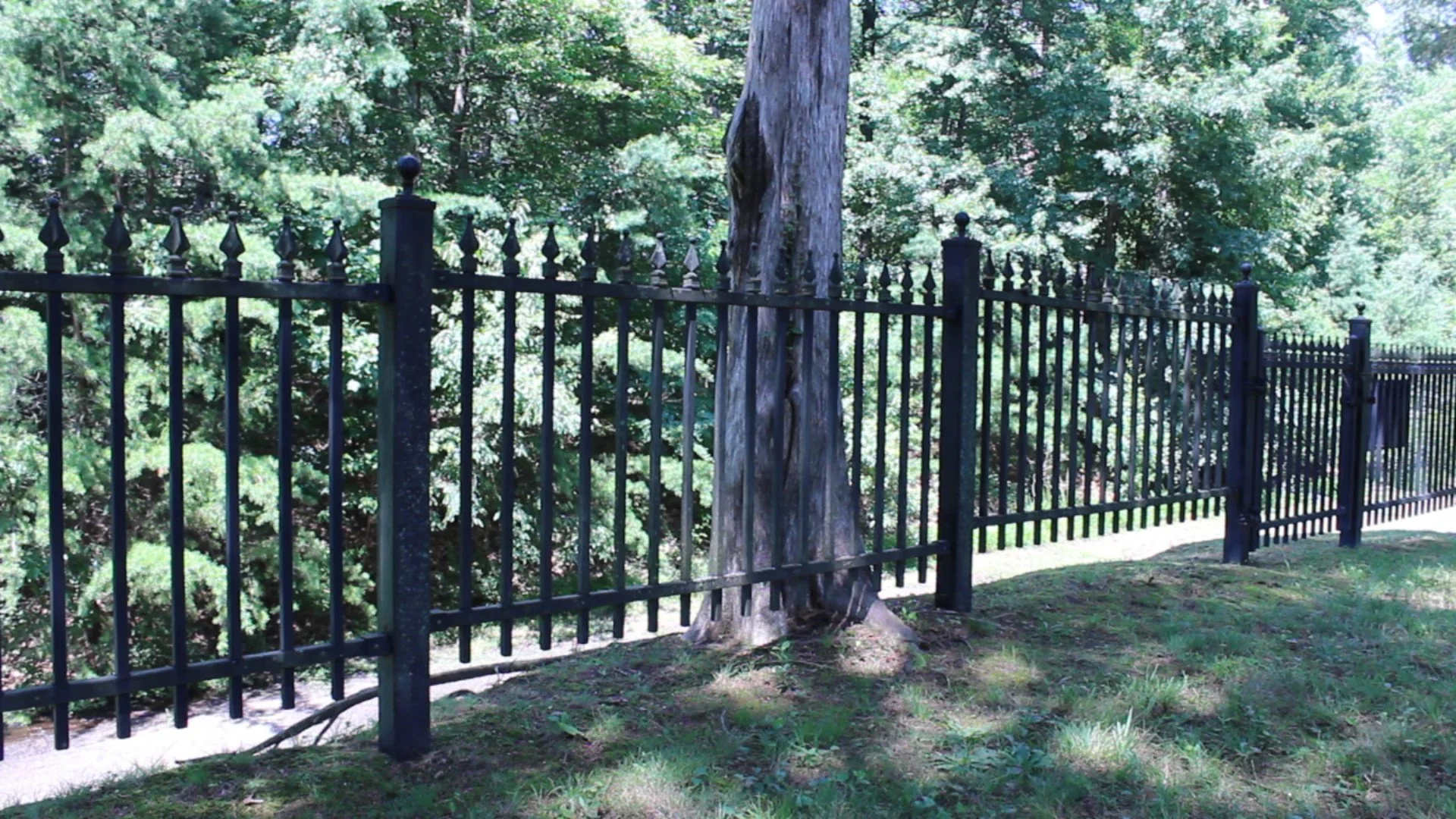
Across Ox Road from the former Occoquan Workhouse lies the forgotten Stoney Lonesome Cemetery, the prison equivalent to a potter’s field. The gray shaggy-barked red cedar trees that dot the small fenced-in area, now privately maintained by the Fairfax Water Authority, keep watch over the cemetery. A small pile of bricks, sunken graves, and several concrete markers with no identifying features are the only reminders that these men ever lived here at all. Today, the former workhouse facilities serve the community as the Occoquan Workhouse Arts Center.
The fractured narrative history of the site, from colonial era plantation grounds to the dormitory prison environment of the workhouse, ends abruptly, with the shouting of inmates from the back of a police vehicle during a prison uprising in 1986. News reports of the corruption and violence at Lorton begin to play, until the dense tangle of notes erupts into an explosion of texture and sound. Text to binary synthesis of my grandmother Mary Oakey’s scholarship on the site provides the high distorted sounds, while the same process channels former Lorton inmate Karim Mowatt’s history of the uprisings into a textured looping track that rumbles beneath the surface, ending in a slow funeral dirge as the cicadas drone in the background.
Baldcypress Nottoway River
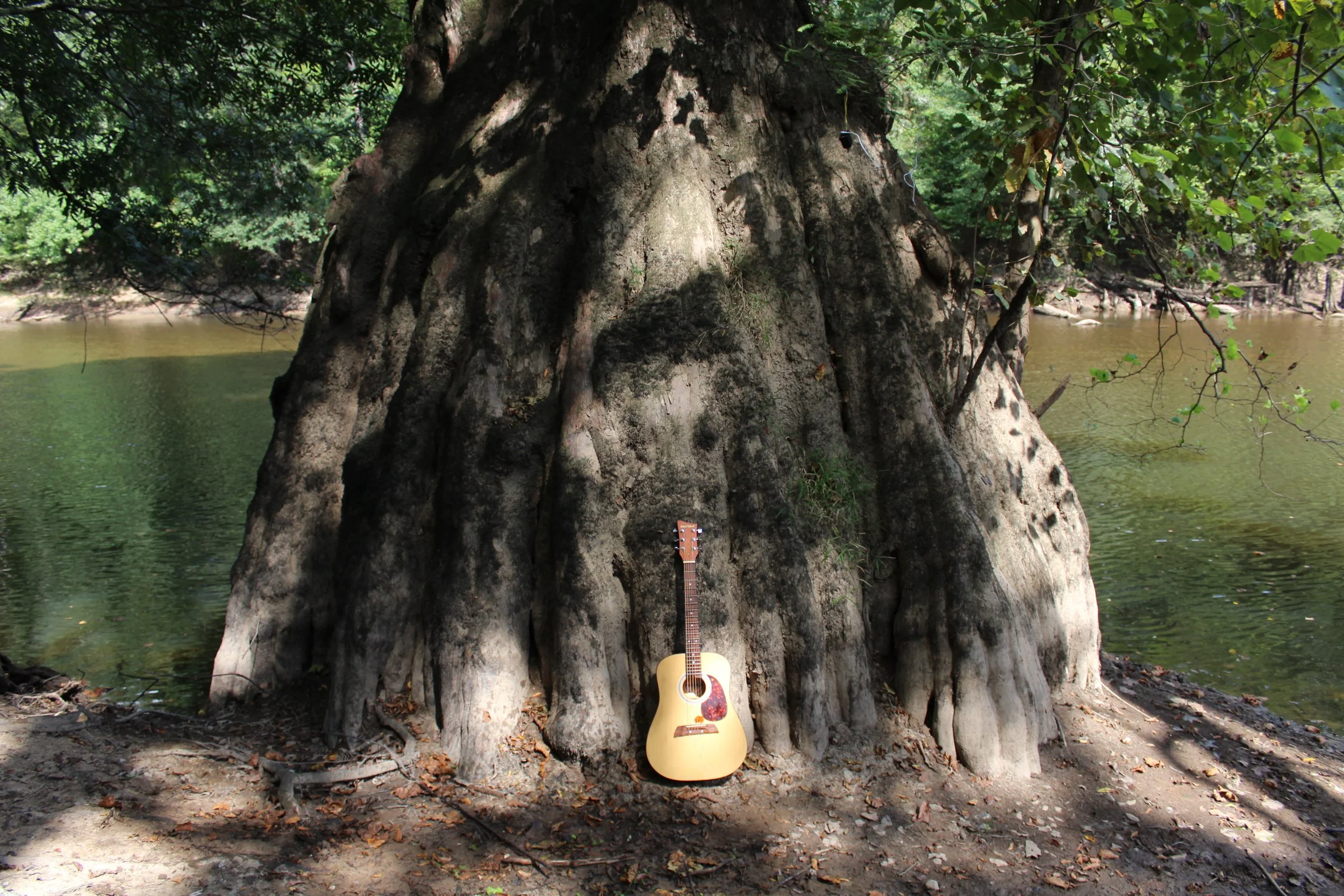
This large cypress tree along the Nottoway River in Southampton County is the oldest tree I interviewed. Covered in moss and hosting many different plants and animals, including two opportunistic sycamore trees growing out of its trunk, this baldcypress has weathered untold centuries along the riverbank. While interior rot makes it impossible to accurately date this massive tree, local big tree expert Byron Carmean confidently guesses it is between 900 and 1,200 years old, and possibly older. The bulbous base of the cypress, with its thin upper trunk due to storm damage some unknown years ago, has affectionally earned it the nickname of turnip tree.
This baldcypress remembers a time before European colonization, when this river knew the Iroquoian, Siouan, and Powhatan Algonquian languages spoken here before European colonization began. It existed before the sixteenth-century efforts by Spain to establish a colonial foothold in the Chesapeake region, and the English settlements during the long seventeenth century, as well as the cruel centuries of forced enslavement, including the patrols and angry white mobs searching the backwaters of the Nottoway River after Nat Turner’s Insurrection against the planter class of Southampton County in 1831.
Gentle rustling from one of the juvenile sycamore trees growing out of the cypress trunk can be heard as flies swarm around the muddy shoreline. The drone, harmonizing with the steady pulse of the cypress, carries you deeper into the piece, and as the water slowly passes by, dense polyrhythms of cricket chirps overwhelm the riverbank. Reaching higher and higher in the midday sun, the crickets move through melodies, then fall back to the cool grassy riverbank, as light shimmers in reflections on the underside of the cypress canopy and the neighboring trees.
Tulip Poplar Old Blue Ridge Turnpike
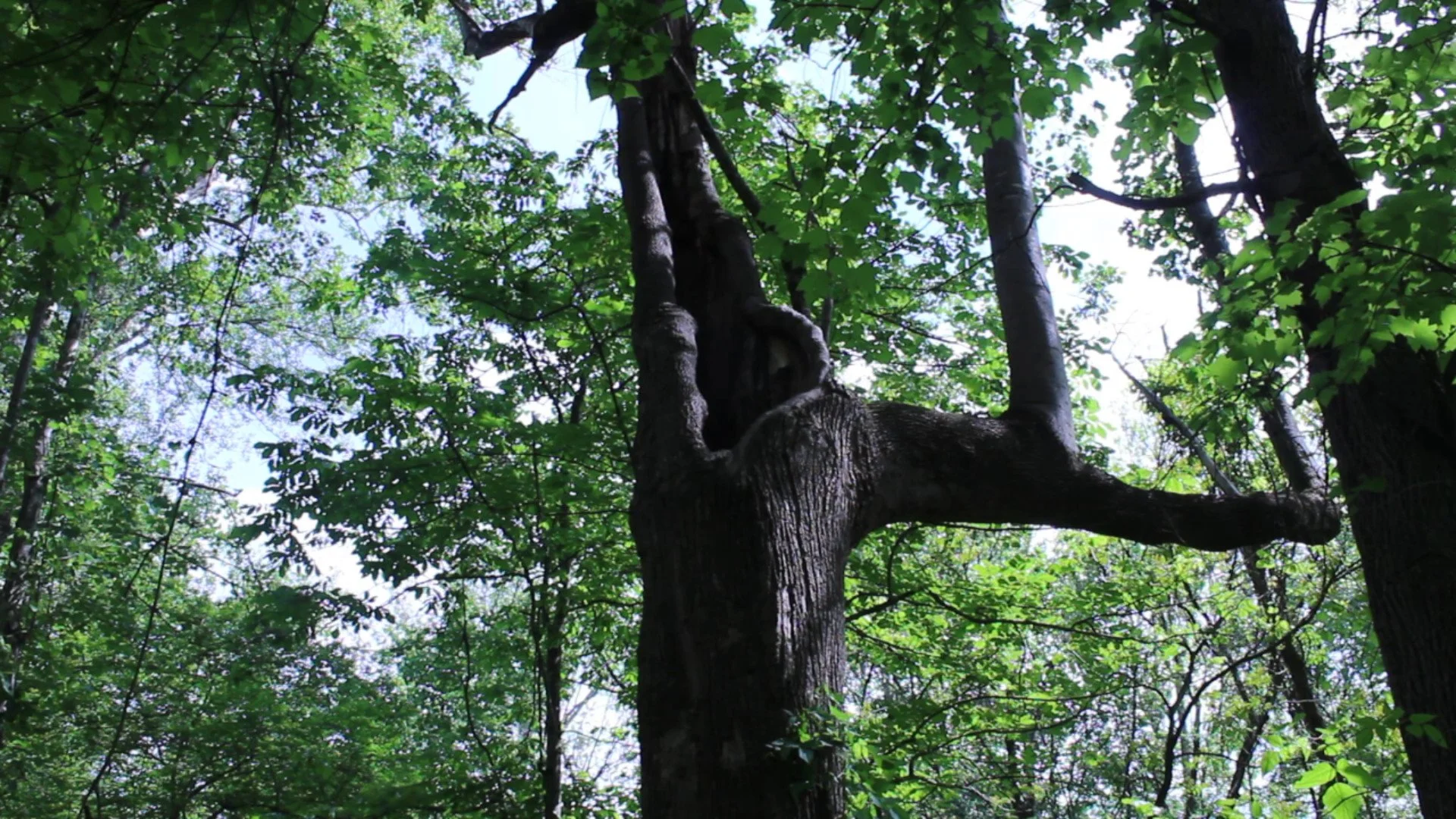
Standing proudly behind the Historic Olive Mill along Madison County’s Old Blue Ridge Turnpike is a tall and weathered tulip poplar tree. Like the cypress and basswood prior, this poplar has lost the main section of its trunk, but still somehow reaches to the highest point of that hillside behind the old mill pond. At the base of the tree is a large opening, large enough for a grown person to stand inside and stare upwards through the rotted insides into the thick canopy of leaves above. Lining the soft interior walls are innumerable ants, beetles, moths, and spiders, forming a dense column of life up and down its trunk.
This tree likely witnessed the construction of the nineteenth century turnpike road by enslaved people in 1853, as well as the transition from carts and wagons pulled by ox and mule teams to the supercharged diesel trucks of the twenty-first century, vehicles hastening Earth’s energy imbalance at a disastrously unprecedented rate. While it remains unclear how trees like this tulip poplar or other varieties of trees throughout Virginia will respond to Earth’s rapidly accelerating temperatures of 2C beyond preindustrial norms, and higher, the climate this tree was born into will never be seen by any living being again.
I wasn’t able to reach the leaves of the tulip poplar to record with my biodata sonification device, so instead I took environmental recordings from inside the tree over the course of many months, sometimes while sitting and playing my guitar. I ran the audio of these recordings through a contact speaker attached to the soft inner walls of the tree and recorded this muffled layer of sound with a probe-style contact mic stuck into the rot. As the distorted wisps of car and truck traffic turn louder and louder, the background environment of wildlife fades, leaving the listener in a barren soundscape.
Milam Apple Spitler Knoll Overlook
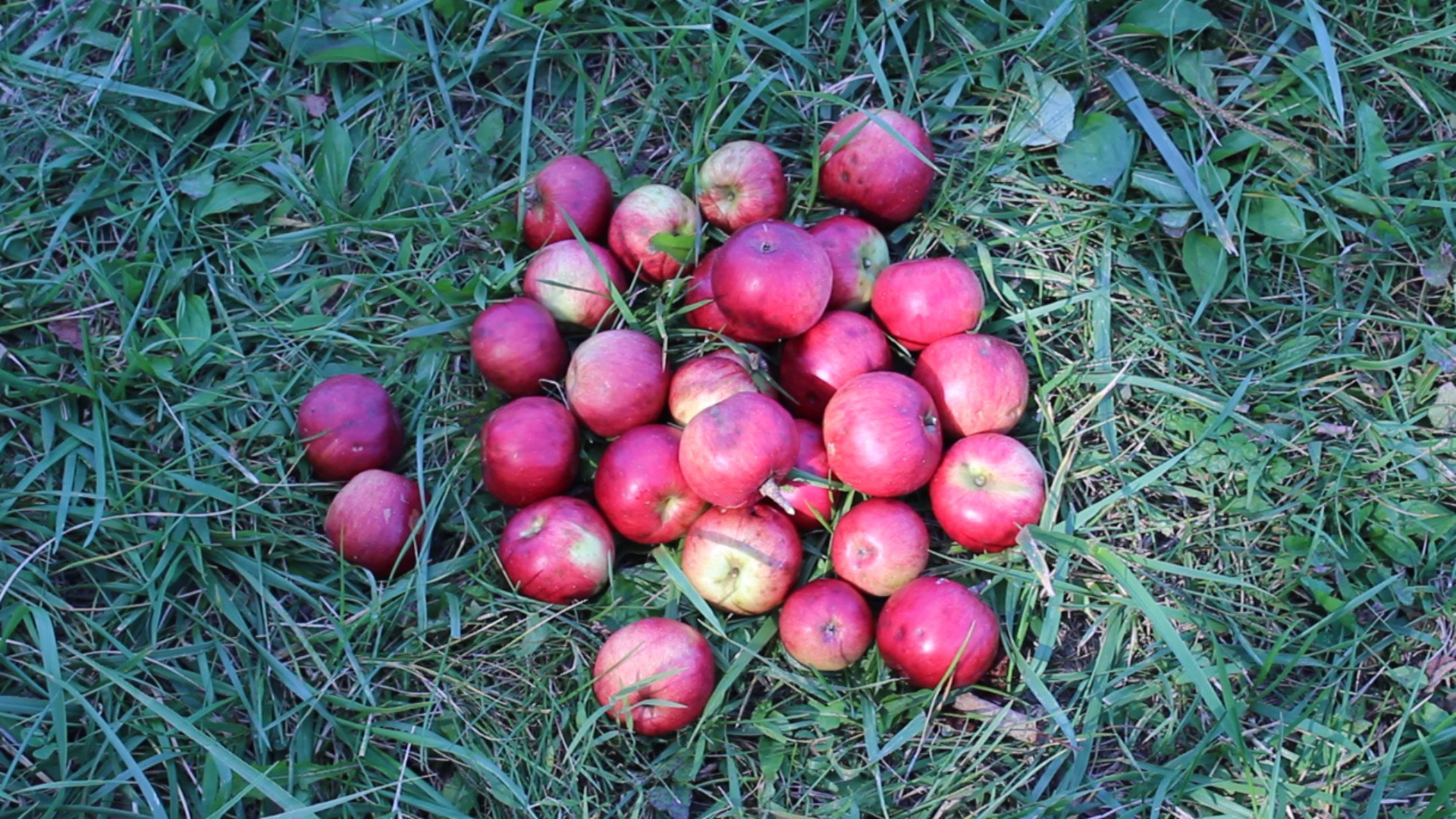
Tucked away among the waist-high grass and wildflowers on the south side of the Spitler Knoll Overlook along Skyline Drive in Shenandoah National Park is a small grove of Milam Apple trees. The Milam Apple is believed to have originally been grafted from a tree that grew in Joseph Milam’s yard near Milam’s Gap in Madison County during the early nineteenth century. Despite their age, these apple trees still produce a tremendous amount of fresh fruit, which littered the forest floor surrounding my recording gear, where clouds of gnats and flying bugs swarmed the fruit rotting in the early autumn heat.
These trees did not spontaneously spring up on their own but rather were planted by one of the 500 some families removed from the Shenandoah Blue Ridge in the 1930s to make way for the national park. This federal removal of mountain families was carried out through the courts using eminent domain. Eugenics provided pseudo-scientific cover to sterilize many women and children, and when the residents could not or refused to negotiate the sale of their property, families were forcibly relocated to the various resettlement communities in nearby counties.
The sounds of Skyline Drive and the thick hum of the underbrush surrounding the trees are punctuated by the first tones from the apple trees playing from a Bluetooth speaker on the ground. Drema Apperson, a descendent of a displaced mountain family, reads letters from residents to the park superintendent while archival voices from the 1934 Columbia Speech Lab collection of these people build and swirl among the voices of the apple trees, ending in the overgrown orchard they live today, while I play former resident G.H. Cave’s “Pretty Fair Miss” on guitar.
Eastern Hemlock Skyland
Just down the road from the Milam Apple trees on Skyline Drive is the Limber Lost Trail, an easy hike through a once magnificent stand of Hemlock trees that formerly occupied many parts of the Shenandoah Blue Ridge. Until the establishment of the national park in 1935, this area, previously known as Skyland, operated as a luxury mountaintop resort. Owned by the early twentieth century developer George Freeman Pollock, wealthy guests of Skyland could find respite from their busy lives below, enjoying picnic lunches prepared by African American cooks and, if they desired, walking among the ancient groves of hemlock nearby.
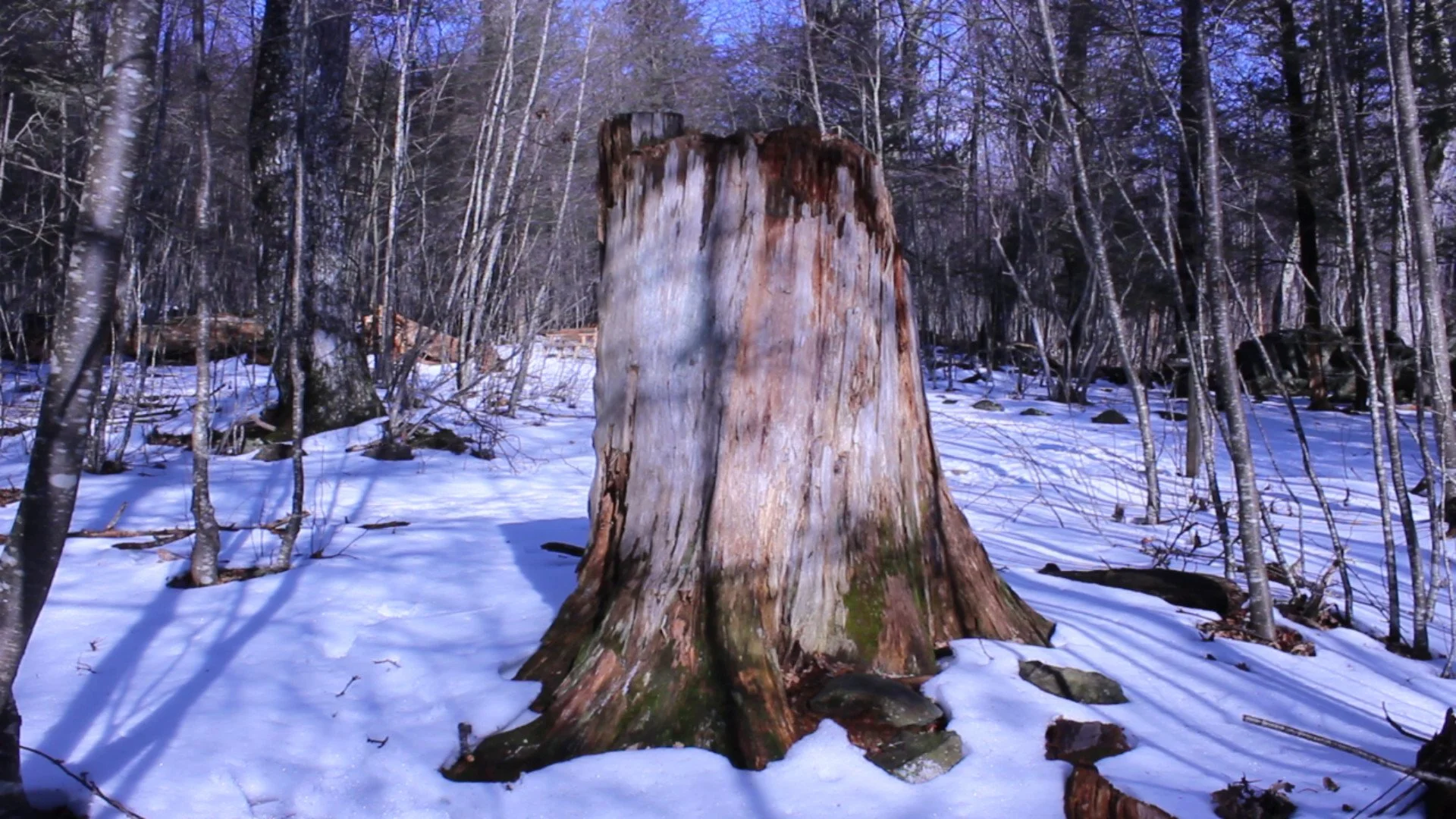
It was in the late twentieth century, however, that park officials became aware of the highly invasive woolly adelgid and its impact on the eastern hemlock in the park. By the end of the century, nearly 80% of the hemlocks in Shenandoah had succumbed to this aphid-like insect. Huge stumps and toppled remnants of these trees can be seen up and down the Limberlost Trail, as well as younger living hemlock trees that have been successfully treated by forestry professionals to combat the ongoing situation.
I visited the Limberlost section of Shenandoah National Park after an especially heavy snowstorm that left the entire region covered in a thick layer of ice. The atmosphere, aside from a few crows and ravens, was completely still. During the duration of this piece, I follow the lifespan of one of these historic hemlock trees, from the years before the introduction of the woolly adelgid to the sorrowful years when its neighbors died beside it.
Mountain Laurel Dark Hollow
After exploring nearly two hours of history related to settler colonialism and climate breakdown in Virginia, I feel it is important to end on a theme of resiliency and regeneration, and the wildfire-scarred mountain laurel in the Upper Dark Hollow section of Shenandoah National Park beautifully embody this process. This isolated stretch of backcountry trail winds its way along a pre-park road at the top of Finks Hollow in Madison County, offering clear views of the neighboring mountains in the fall and winter and dense patches of ephemeral flowers in the late spring. It is a favorite trail of mine that I visit regularly.
In late October of 2023, after record-breaking heat, and a historic period of drought, a fire sparked in the vicinity of Quaker Run in a hollow nearby, and within days began to burn out of control. As high winds blew through the mountains in the weeks that followed, the fire spread to this section of Dark Hollow. Firefighters battled through mid-November to get control, or even just slow, the fire’s progress. To reduce the paths the fire could take, they cut many of the mature mountain laurel groves down to the stump. I first documented this disaster in “Quaker Run Wildfire (10/24/23–11/17/23) for Fiddle and Guitar,” released by Longform Editions. The following spring, when I visited to record these interviews, I was overjoyed to see new growth at the base of each tree.
This piece centers the voice of these mountain laurel as I recreate the experience of flash wildfire on the landscape using visual auditory translations of photographs of smoke and wildfire in this area, as well as text to binary synthesis of reports written by the firefighters who extinguished the month-long blaze. In the end, pulsing biodata from the mountain laurel cuts through the wildfire-scarred landscape as tender shoots of new growth reach towards the light.